

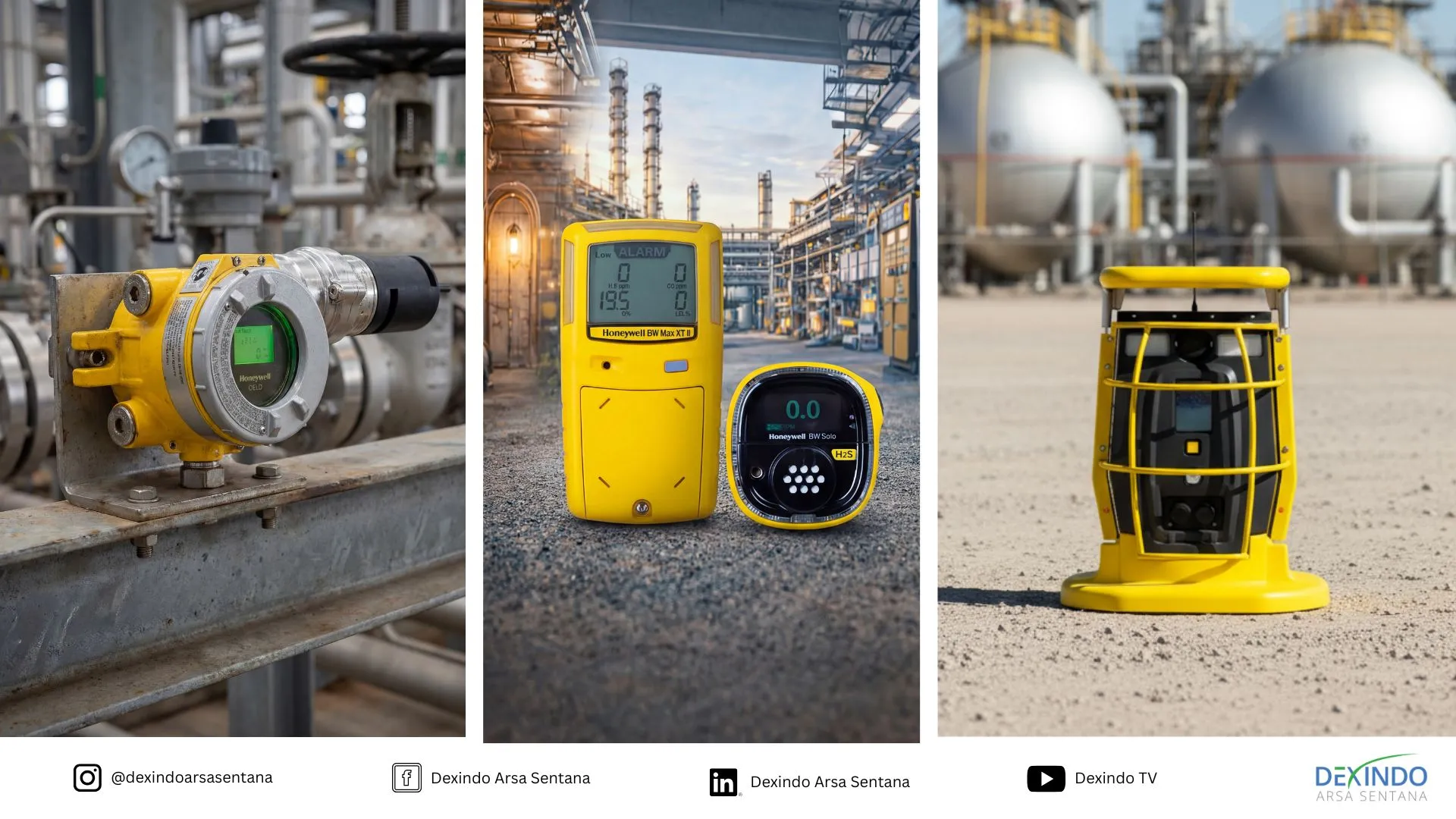
Gas detectors are essential safety devices used to detect hazardous gases in various environments. There are several types of gas detectors, with the most common being portable, fixed, and wireless gas detectors. Each type is designed for a specific purpose and application.
So, what are the differences between them? Let’s explore them in the article below.
Fixed Gas Detectors
Fixed gas detectors are permanently installed in areas where gas leaks are most likely to occur. They operate continuously to monitor gas concentrations and provide early detection of abnormal conditions.
These detectors are typically positioned near potential leak sources or high-risk zones and may be connected to alarm systems, ventilation controls, or shutdown mechanisms. Continuous monitoring helps ensure that gas hazards are identified and addressed before they escalate.
Primary role:
- Continuous area monitoring
- Early detection of gas leaks
Portable Gas Detectors
Portable gas detectors are designed to monitor gas exposure at the individual level. These devices are carried or worn by workers to detect hazardous gas concentrations in real time, particularly in areas where conditions may change quickly.
They are commonly used during confined space entry, maintenance activities, inspections, and other non-routine tasks.
Immediate alarms allow workers to take prompt action, such as stopping work or evacuating the area, before gas levels reach dangerous limits.
Primary role:
- Personal gas exposure monitoring
- Early warning during high-risk tasks
Wireless Gas Detectors
Wireless gas detectors, also known as transportable gas detector, provide area monitoring while offering greater installation flexibility. By transmitting real-time gas data to a central monitoring system, they enable efficient oversight of multiple locations without the need for extensive cabling.
This type of detector is well suited for temporary installations, remote sites, or facilities with changing layouts. Although wireless gas detectors generally require a higher initial investment, their ease of deployment and scalability make them an effective solution for dynamic operating environments.
Rental gas detector options are also available from providers such as Dexindo Arsa Sentana, allowing users to implement advanced monitoring without long-term capital commitment.
Primary role:
- Flexible area monitoring
- Centralized visibility across multiple locations
Read: How Gas Detector Sensors Work and Why Detection Can Fail
The Differences Portable vs Fixed vs Wireless Gas Detectors at a Glance
| Type | Main Use | Monitoring | Mobility |
|---|---|---|---|
| Portable | Personal safety | Individual | High |
| Fixed | Area protection | Continuous | None |
| Wireless | Remote monitoring | Centralized | Moderate |
Read: Complete Guide to Gas Detectors for Industrial Facilities in Southeast Asia
Choosing the Right Gas Detector

Portable, fixed, and wireless gas detectors are designed for different safety needs. Portable detectors protect individuals, fixed detectors safeguard specific locations, and wireless detectors offer flexible and remote monitoring solutions. Choosing the right type depends on the environment, risk level, and monitoring requirements.
Need consultation for your requirements? As a master distributor of Honeywell gas detectors in Southeast Asia, Dexindo’s experienced and certified team is ready to assist you through a free consultation. Contact us today!
