

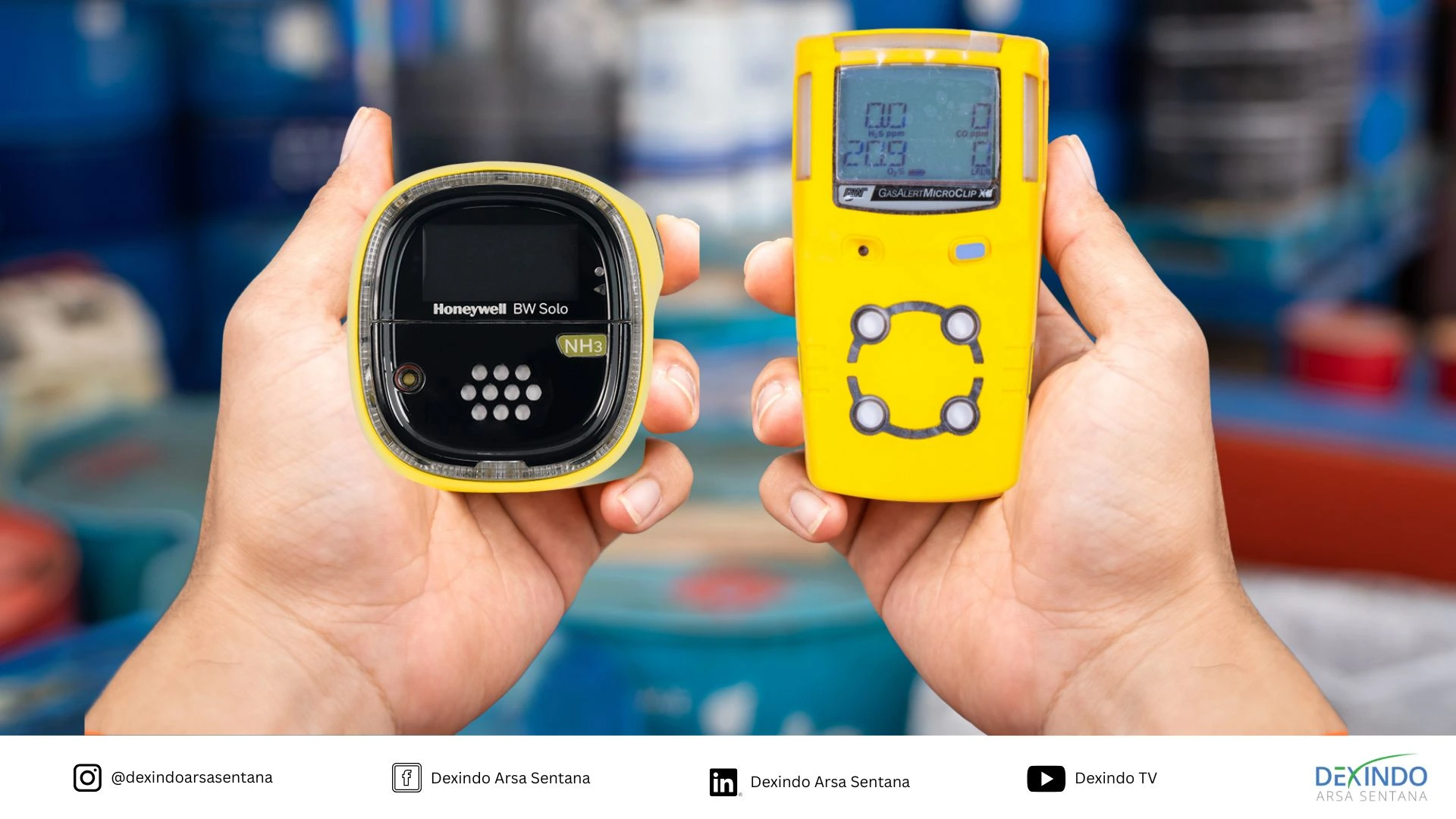
In gas detector selection, an important factor to consider is the availability of single-gas and multi-gas sensor options. The choice of sensor depends on the operating environment and the types of gases present or potentially encountered.
Read: Know the Different: Portable vs Fixed vs Wireless Gas Detectors
What Is a Single-Sensor Gas Detector?
A single-sensor gas detector is designed to detect one specific type of gas. It uses a dedicated sensor calibrated for a particular gas such as carbon monoxide (CO), hydrogen sulfide (H₂S), oxygen (O₂), or methane (CH₄).
Single-gas detectors are commonly applied as a best-practice solution for fixed or continuous monitoring where the gas hazard is known, isolated, and does not vary over time.
Key Features:
- Detects only one target gas
- Simple design and operation
- Typically compact and lightweight
- Lower upfront cost
Advantages of Single-Sensor Gas Detector
- Precise measurement accuracy for a defined gas hazard
- Reduced cross-sensitivity compared to multi-gas configurations
- Lower power consumption and simplified maintenance
- Cost-efficient for single-hazard environments
What Is a Multi-Sensor Gas Detector?
A multi-sensor gas detector (also called a multi-gas detector) combines two or more sensors in a single device. It can simultaneously monitor several gases, such as oxygen levels, toxic gases, and combustible gases.
In many industries, the use of multi-gas detectors is considered best practice for confined space entry and high-risk operations
Key Features:
- Detects multiple gases at the same time
- Integrated display and alarm system
- Portable or fixed configurations
- Advanced data logging and connectivity options
Advantages of Multi-Sensor Gas Detector
- Comprehensive situational awareness in complex environments
- Reduced equipment redundancy compared to multiple single-gas detectors
- Enhanced safety for confined space entry and mobile workers
Read: How Gas Detector Sensors Work and Why Detection Can Fail
Key Factors in Choosing Between Single and Multi-Gas Detectors
The selection between single-gas and multi-gas detectors should be driven by a structured risk assessment. Important factors include:
1. Type and Number of Gas Hazards
If the environment presents exposure to only one known gas, a single-gas detector may be sufficient. However, if multiple toxic, combustible, or oxygen-related hazards exist, a multi-gas detector is required to ensure comprehensive protection.
2. Environmental and Operational Conditions
Dynamic environments—such as confined spaces, process plants, or maintenance activities—often involve changing gas conditions. Multi-gas detectors provide broader situational awareness in these scenarios.
3. Regulatory and Safety Requirements
Many safety standards and regulations mandate the use of multi-gas detectors for specific applications, particularly confined space entry and high-risk industrial operations.
4. Maintenance and Lifecycle Considerations
Single-gas detectors are easier to maintain and calibrate, while multi-gas detectors require more complex calibration procedures but reduce the need for multiple standalone devices.
Technical Comparison: Features, Advantages, and Limitations of Single vs. Multi-Gas Detectors
| Parameter | Single-Gas Detector | Multi-Gas Detector |
|---|---|---|
| Number of Gases Monitored | One specific gas | Two or more gases simultaneously |
| Sensor Configuration | Dedicated single sensor | Integrated multi-sensor system |
| Detection Coverage | Limited to a single, known hazard | Comprehensive coverage for multiple gas hazards |
| Accuracy & Selectivity | High accuracy and selectivity for the target gas | High accuracy with proper calibration for each sensor |
| Calibration & Maintenance | Simple calibration and lower maintenance effort | More complex calibration due to multiple sensors |
| Power Consumption | Lower power consumption | Higher power consumption |
| Initial Cost | Lower initial investment | Higher initial investment |
| Operational Complexity | Simple operation and alarm management | Advanced operation with multiple alarms and indicators |
| Advantages | Cost-effective, easy to use, highly reliable for single-gas applications | Comprehensive safety monitoring, reduced need for multiple devices |
| Limitations | Not suitable for environments with multiple gas hazards | Higher cost and increased calibration complexity |
So, Which One Should You Choose?
The right choice depends on your environment, risk level, and budget:
- Choose a single-sensor gas detector if your application involves exposure to one known gas and simplicity is a priority. (recommendation: Honeywell BW™ Solo).
- Choose a multi-sensor gas detector if you need broader protection against multiple gas hazards or operate in unpredictable or regulated environments. (recommendation: Honeywell MicroClip XL, Honeywell BW Max XT II, Honeywell BW™ Ultra 4).
In summary, selecting the appropriate gas detector configuration is a risk-based decision that must align with environmental conditions, operational complexity, and regulatory requirements.
If you are evaluating single-gas versus multi-gas detection solutions and require technical consultation, Dexindo provides expert support to help you select the right system. Contact us now!