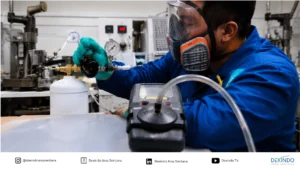

Field technicians who routinely use Direct-Reading Portable Gas Monitors (DRPGMs) to measure oxygen levels and detect toxic or flammable gases need to understand the importance of bump testing and calibration procedures.
A gas detector is only effective when users can rely on its readings. In industrial operations, confidence in the instrument does not come solely from product specifications, but from regular testing, accurate calibration, and proper maintenance carried out consistently by field personnel.
Read: Why Do Gas Detectors Trigger False Alarms? Causes and Solutions
What is a Bump Test?
A bump test is a functional check performed by exposing the gas detector to a known concentration of gas to verify that the sensors and alarms respond correctly. This is a mandatory daily procedure for every engineer who uses a portable gas detector.
Generally, a detector passes a bump test when it can identify at least 50% of the concentration of the calibration gas applied. For example, if the calibration gas contains 100 ppm of CO and 35 ppm of H2S, the detector should be able to read at least 50 ppm of CO and 17.5 ppm of H2S.
Due to gradual sensor degradation over time, a device may eventually fail the bump test after extended use.
What is a Callibration?
Calibration is the process of adjusting and verifying a gas detector to ensure the readings produced remain accurate and reliable.
The main objective of calibration is to make sure the measuring instrument delivers precise results that match known reference values.
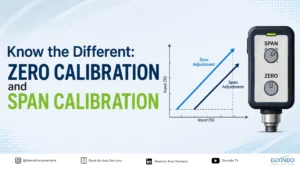
When discussing calibration, you will also encounter the term “Zero Calibration.” It is a process used to set the gas detector’s baseline reading to zero in a clean and fresh air environment, ensuring the instrument does not display false gas readings before use.
Read: What Is Cross Sensitivity in Gas Sensors? Causes and How to Prevent It
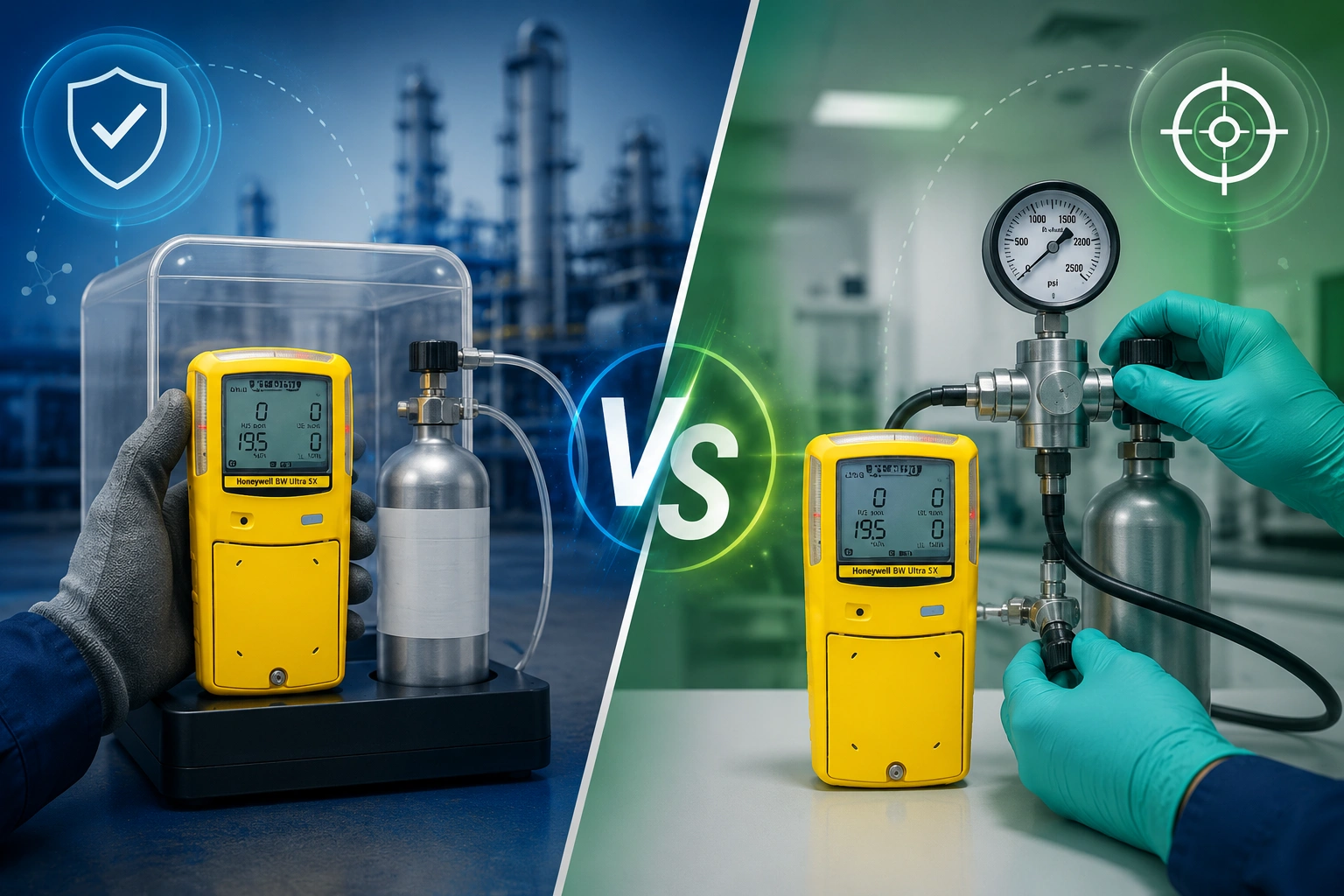
The Different: Gas Detector Bump Test vs Calibration
A bump test only verifies that the detector responds to gas exposure, while calibration adjusts the instrument to maintain measurement accuracy.
| Aspect | Bump Test | Calibration |
|---|---|---|
| Purpose | Verify detector response | Verify and adjust accuracy |
| Adjustment Made | No | Yes |
| Duration | Usually under 1 minute | Several minutes |
| Frequency | Daily or before use | Monthly to quarterly |
| Checks Alarm Function | Yes | Partially |
| Confirms Reading Accuracy | No | Yes |
| Operational Objective | Functionality | Measurement integrity |
Why Engineers Should Never Skip This
In industrial environments, portable gas detectors are considered critical safety equipment. A detector that is not properly bump tested or calibrated may provide inaccurate readings without warning.
Experienced field engineers understand that sensor performance can gradually decline due to environmental exposure, sensor aging, and daily usage. Because of this, routine bump testing and calibration are essential practices to ensure worker safety and maintain confidence in gas detection performance.
Frequently Ask Questions (FAQ)
What is the difference between a bump test and calibration?
A bump test is a quick functional test used to confirm that the gas detector responds to gas exposure and activates alarms properly. Calibration, on the other hand, adjusts the detector to ensure the readings remain accurate.
How often should a gas detector be bump tested?
Portable gas detectors should ideally be bump tested before each day of use or prior to entering a hazardous work area.
How frequently should gas detectors be calibrated?
Most manufacturers recommend full calibration every 3 to 6 months. However, calibration frequency may vary depending on environmental conditions, sensor exposure, and usage intensity.
Can a gas detector pass a bump test but still require calibration?
Yes. A detector may still respond to gas during a bump test while producing inaccurate readings. This is why routine calibration remains necessary.
Why is calibration important for gas detectors?
Calibration ensures the detector provides reliable and accurate gas measurements, helping protect workers from hazardous atmospheres and reducing the risk of false readings.
What can cause gas sensor drift?
Sensor drift can occur due to aging, exposure to contaminants, extreme temperatures, humidity, or repeated exposure to gases over time.
What happens if a gas detector fails a bump test?
If the detector fails a bump test, it should not be used in the field until troubleshooting, recalibration, or sensor replacement has been completed.
Do all gas detectors require maintenance?
Yes. Regular maintenance, including sensor inspection, bump testing, calibration, battery checks, and cleaning, is essential to maintain detector performance and reliability.
Can environmental conditions affect gas detector accuracy?
Yes. Factors such as temperature, humidity, dust, chemical contamination, and sensor poisoning can impact detector performance and accuracy.
Who should perform calibration and testing?
Calibration and bump testing should be carried out by trained personnel following the manufacturer’s procedures and safety guidelines.
Reference:
- https://www.indsci.com/en/blog/gas-detector-calibration
- https://www.indsci.com/en/blog/calibration-and-bump-testing-procedures