

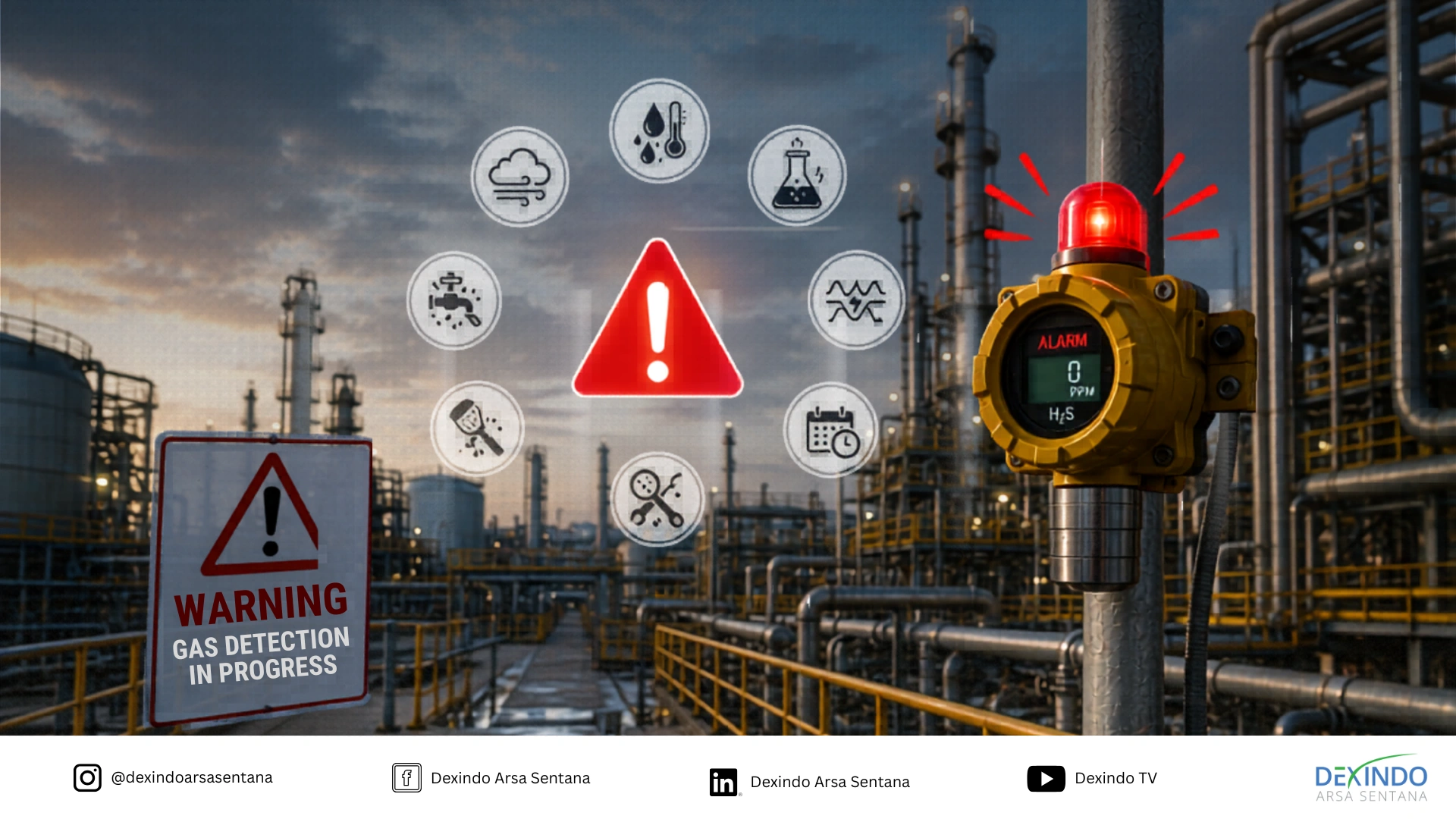
A false alarm occurs when a gas detector triggers an alert even though no actual hazardous gas concentration is present. In some cases, the detector may respond to harmless substances or environmental conditions that mimic the target gas.
Read: Understanding LEL (Lower Explosive Limit) in Gas Detector
Common Causes of False Gas Detector Alarms
1. Cross-Sensitivity to Other Gases
Many gas sensors, particularly electrochemical sensors, are designed to detect specific gases but may also react to chemically similar substances.
For example:
- A hydrogen sulfide (H₂S) sensor may react to sulfur dioxide (SO₂)
- Carbon monoxide (CO) sensors may respond to hydrogen gas
- Volatile organic compounds (VOCs) can interfere with combustible gas sensors
This phenomenon is known as cross-sensitivity and is one of the leading causes of unexpected alarms in industrial environments.
2. Sensor Contamination
Gas detectors operating in dusty, oily, humid, or chemically aggressive environments are vulnerable to sensor contamination. Dirt, silicone vapors, grease, cleaning chemicals, and airborne particles may affect sensor performance and trigger false readings.
Common contamination sources include:
- Paint fumes
- Silicone sealants
- Lubricants
- Solvents
- Dust accumulation
Over time, contamination can reduce sensor accuracy and stability.
3. Improper Calibration
Calibration ensures that the gas detector accurately measures gas concentrations. If calibration is skipped, performed incorrectly, or conducted using expired calibration gas, the detector may produce inaccurate readings and nuisance alarms.
Improper calibration can result from:
- Using incorrect calibration gas mixtures
- Infrequent calibration schedules
- Untrained personnel
- Environmental conditions during calibration
4. Environmental Conditions
Environmental factors can significantly affect gas detector performance. Extreme conditions may alter sensor response or create unstable readings.
Common environmental influences include:
- High humidity
- Extreme temperatures
- Rapid pressure changes
- Strong airflows
- Condensation
For instance, sudden humidity changes may cause electrochemical sensors to drift temporarily, while condensation can interfere with infrared sensors.
5. Electromagnetic and Radio Frequency Interference
Industrial facilities often contain equipment that generates electromagnetic interference (EMI) or radio frequency interference (RFI), such as:
- Two-way radios
- High-voltage motors
- Variable frequency drives (VFDs)
- Wireless communication systems
These signals can affect detector electronics and lead to false alarms or unstable readings.
6. Sensor Aging and End-of-Life Issues
Gas sensors have limited operational lifespans. As sensors age, their sensitivity may decline, response times may slow, or signal drift may increase. Aging sensors are more likely to produce false alarms or unreliable readings.
Typical sensor lifespan:
- Electrochemical sensors: 2–3 years
- Catalytic bead sensors: 3–5 years
- Infrared sensors: longer lifespan with proper maintenance
7. Incorrect Detector Placement
Improper detector placement may expose the instrument to temporary gas accumulations, exhaust fumes, steam, or chemical vapors unrelated to the monitored hazard.
Examples include:
- Installing detectors too close to ventilation outlets
- Positioning sensors near vehicle traffic
- Mounting detectors in dead-air spaces
Poor placement can increase nuisance alarms while reducing effective hazard detection.
Read: How Gas Detector Sensors Work and Why Detection Can Fail
Solutions to Reduce False Alarms in Gas Detectors
False alarms can interrupt operations, reduce productivity, and create alarm fatigue among workers. While gas detectors are designed to improve safety, poor maintenance or incorrect setup can cause unnecessary alarms.
Here are the most effective ways to reduce false alarms in gas detection systems.
1. Perform Regular Calibration
Gas sensors can drift over time due to aging and environmental exposure. When calibration is skipped, detectors may become too sensitive and trigger alarms even when no dangerous gas is present.
Regular calibration helps ensure the detector reads gas concentrations accurately. Always use certified calibration gas and follow the manufacturer’s recommended schedule.
2. Conduct Routine Bump Tests
A bump test checks whether the sensor and alarm system respond properly when exposed to gas. This quick test helps identify weak sensors, blocked filters, or alarm failures before the detector is used in the field.
For portable gas detectors, bump testing before each use is considered best practice.
3. Use the Right Sensor Technology
Different gas sensors are designed for different applications. Using the wrong sensor type can increase cross-sensitivity and nuisance alarms.
For example, infrared sensors are often more stable in harsh environments, while electrochemical sensors are commonly used for toxic gas monitoring. Selecting the correct technology improves accuracy and reliability.
4. Prevent Sensor Contamination
Dust, oil, paint fumes, chemicals, and silicone vapor can contaminate gas sensors and affect performance. Contaminated sensors may produce unstable readings or repeated false alarms.
Regular cleaning and proper storage help keep sensors in good condition. Protective filters can also reduce exposure to contaminants.
5. Optimize Detector Placement
Incorrect detector placement is a common cause of nuisance alarms. Gas detectors should be installed based on gas behavior, airflow patterns, and possible leak locations.
For example, detectors placed near ventilation outlets, exhaust systems, or vehicle traffic may detect temporary vapors that are not actual gas leaks. Proper placement improves detection accuracy and reduces unnecessary alarms.
6. Control Environmental Conditions
Extreme temperatures, humidity, condensation, and pressure changes can affect sensor stability. In outdoor or harsh environments, these conditions may trigger temporary false alarms.
Using detectors designed for the operating environment and installing weather protection can help improve performance.
7. Reduce Electromagnetic Interference (EMI)
Electrical equipment such as motors, radios, and variable frequency drives (VFDs) can interfere with gas detector electronics. This interference may create unstable readings or false alarms.
Proper grounding, shielded cables, and correct installation practices help reduce EMI issues.
8. Replace Aging Sensors
Gas sensors do not last forever. As sensors age, they become less stable and more likely to produce inaccurate readings.
Signs of aging sensors include slow response times, calibration failures, and repeated nuisance alarms. Replacing sensors on schedule helps maintain reliable performance.
9. Train Operators Properly
Improper handling and incorrect maintenance procedures can also cause false alarms. Operators should understand how to use, test, calibrate, and store gas detectors correctly.
Well-trained personnel can identify potential issues early and respond more effectively to alarms.
10. Implement Preventive Maintenance
Preventive maintenance helps detect small problems before they become major issues. A good maintenance program includes cleaning, calibration, bump testing, inspections, and documentation.
Routine maintenance improves detector reliability, reduces downtime, and minimize false alarms.
Read: Comparison Unit: Honeywell MicroClip XL vs Max XT II
Conclusion
False alarms in gas detectors are a common challenge in industrial environments, but most of them can be prevented with proper maintenance and system management. Issues such as cross-sensitivity, sensor contamination, improper calibration, environmental conditions, and incorrect detector placement can all affect detector performance and trigger unnecessary alarms.
By implementing regular calibration, routine bump testing, preventive maintenance, proper sensor selection, and correct detector placement, companies can significantly reduce nuisance alarms and improve overall gas detection reliability.
A well-maintained gas detection system not only helps maintain workplace safety, but also improves operational efficiency, minimizes downtime, and ensures workers can trust alarms when real hazards occur.