
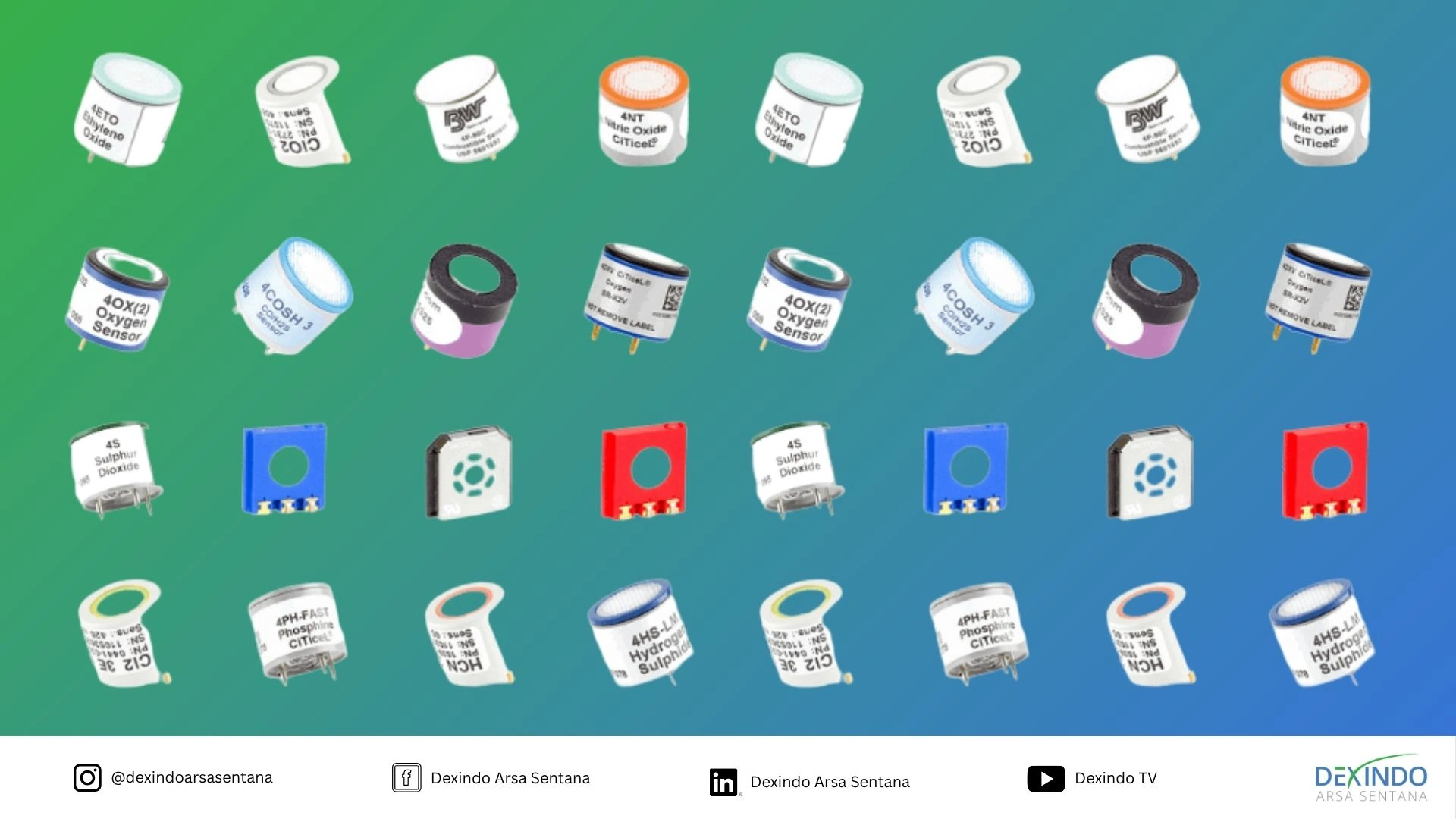
The main types of gas sensors are electrochemical, catalytic bead, infrared (IR), photoionization detector (PID), semiconductor, and ultrasonic. With these sensor options available, selecting the right gas detector is not simply about choosing a device; it is about choosing the sensor technology that will best protect personnel, assets, and operations from potentially catastrophic incidents.
Different gases behave differently. Some are combustible, some are toxic, and others can displace oxygen without any visible warning signs. Because of this, no single sensor technology can detect every gas effectively. Understanding the strengths and limitations of each sensor type is essential for designing a reliable gas detection strategy.
This article explains the most commonly used gas detector sensor technologies, how they work, and where they are best applied in industrial environments.
Read: How Gas Detector Sensors Work and Why Detection Can Fail
1. Electrochemical Sensors
Best For:
- Carbon Monoxide (CO)
- Hydrogen Sulfide (H₂S)
- Sulfur Dioxide (SO₂)
- Nitrogen Dioxide (NO₂)
- Oxygen (O₂)
How It Works
Electrochemical sensors detect gases through a chemical reaction occurring inside a sensor cell. When gas enters the sensor, it reacts with electrodes immersed in an electrolyte solution. This reaction generates an electrical current proportional to the gas concentration.
Advantages
- High sensitivity for toxic gases
- Excellent selectivity
- Low power consumption
- Fast response time
Limitations
- Limited sensor lifespan
- Performance can be affected by extreme temperatures and humidity
- Requires periodic calibration
Typical Applications
Electrochemical sensors are widely used in:
- Oil & gas facilities
- Chemical plants
- Wastewater treatment facilities
- Confined space entry monitoring
- Portable personal gas detectors
Read: Calibrate Gas Detector: How Frequently Should Gas Monitors Be Calibrated?
2. Catalytic Bead Sensors
Best For:
- Methane (CH₄)
- Propane (C₃H₈)
- Butane (C₄H₁₀)
- Hydrogen (H₂)
- General combustible gases
How It Works
Catalytic sensors measure combustible gases by oxidizing them on a heated catalyst surface. The resulting temperature increase changes the sensor’s electrical resistance, which is converted into a gas concentration reading.
Measurements are typically displayed as a percentage of the Lower Explosive Limit (%LEL).
Advantages
- Proven and reliable technology
- Accurate combustible gas monitoring
- Cost-effective for many applications
Limitations
- Requires oxygen to operate
- Vulnerable to catalyst poisoning from substances such as silicone, sulfur compounds, and lead
- Requires regular calibration and bump testing
Typical Applications
Catalytic sensors are commonly installed in:
- Refineries
- LNG facilities
- Fuel storage terminals
- Manufacturing plants
- Offshore platforms
Read: Understanding Gas Detector Readings and Alarms
3. Infrared (NDIR) Sensors
Best For:
- Hydrocarbon gases
- Carbon Dioxide (CO₂)
- Methane (CH₄)
How It Works
Non-Dispersive Infrared (NDIR) sensors detect gases by measuring the absorption of infrared light at specific wavelengths.
Each gas absorbs infrared energy differently. By measuring this absorption pattern, the sensor determines gas concentration.
Advantages
- Does not require oxygen
- Resistant to sensor poisoning
- Long operational lifespan
- Highly stable in harsh environments
Limitations
- Higher initial cost
- Not suitable for all gas types
Typical Applications
NDIR technology is preferred in:
- Offshore oil and gas facilities
- Petrochemical plants
- Carbon capture systems
- Biogas facilities
- Hydrogen production environments
4. Photoionization Detector (PID) Sensors
Best For:
- Volatile Organic Compounds (VOCs)
- Benzene
- Toluene
- Xylene
- Solvents and hydrocarbons
How It Works
PID sensors use ultraviolet (UV) light to ionize gas molecules. The resulting charged particles generate an electrical current that corresponds to gas concentration.
PID technology can detect contaminants at very low concentrations, often down to parts-per-billion (ppb) levels.
Advantages
- Extremely sensitive
- Fast response
- Ideal for VOC monitoring
- Early leak detection capability
Limitations
- Cannot detect every gas
- Requires lamp maintenance
- Readings may vary depending on gas correction factors
Typical Applications
PID sensors are frequently used in:
- Chemical manufacturing
- Environmental monitoring
- Hazardous material response
- Industrial hygiene programs
- VOC compliance monitoring
5. Semiconductor (MOS) Sensors
Best For:
- General air quality monitoring
- Residential and commercial applications
- Certain combustible gases
How It Works
Metal Oxide Semiconductor (MOS) sensors operate by detecting changes in electrical resistance when gas molecules interact with a heated sensing surface.
Advantages
- Cost-effective
- Long service life
- Broad gas detection capability
Limitations
- Lower selectivity
- Susceptible to false alarms
- Less suitable for critical industrial safety applications
Typical Applications
- Indoor air quality systems
- Building automation
- Smart monitoring systems
- Consumer safety devices
6. Ultrasonic Gas Leak Detectors
Best For:
- High-pressure gas leaks
- Outdoor installations
- Open-air hazardous areas
How It Works
- Unlike conventional gas detectors, ultrasonic detectors do not measure gas concentration.
- Instead, they detect the high-frequency acoustic signature generated by pressurized gas escaping from a leak.
Advantages
- Immediate leak detection
- Effective outdoors where gas clouds disperse quickly
- Independent of wind direction
Limitations
- Does not identify gas concentration
- Requires sufficient leak pressure
Typical Applications
- Offshore platforms
- LNG terminals
- Compressor stations
- Gas transmission facilities
How to Select the Right Sensor
Before purchasing a gas detector, safety managers should evaluate:
1. Target Gas: Identify exactly which gas must be detected.
2. Detection Range: Determine whether detection is required in ppm, ppb, or %LEL.
3. Environmental Conditions: Consider temperature, humidity, dust, vibration, and airflow.
4. Installation Location: Indoor and outdoor environments often require different technologies.
5. Maintenance Requirements: Assess calibration frequency, sensor replacement intervals, and operational costs.
6. Regulatory Compliance: Ensure the selected system complies with applicable industry standards and safety requirements.
Why Sensor Selection Matters
Many gas detection failures occur not because the detector itself is defective, but because the wrong sensor technology was selected for the application.
For example:
- A catalytic sensor may struggle in oxygen-deficient environments.
- An infrared sensor may detect hydrocarbons effectively but cannot monitor oxygen levels.
- An electrochemical sensor designed for carbon monoxide will not accurately measure volatile organic compounds (VOCs).
The first step in any gas detection project is identifying the target gas, environmental conditions, and required detection range.
Final Thoughts
No single gas sensor technology is suitable for every application. The most effective gas detection systems are built by matching the correct sensor technology to the specific hazards present in the workplace.
For many industrial facilities, a combination of sensor technologies, such as electrochemical sensors for toxic gases, infrared sensors for hydrocarbons, and PID sensors for VOC monitoring provides the highest level of protection.
Investing time in proper sensor selection is not just a technical decision; it is a critical component of operational safety, regulatory compliance, and risk management.