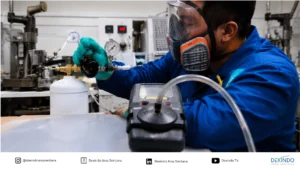


One key advantage of an LEL gas detector is its ability to detect gas leaks before they become dangerous. Continuous monitoring of combustible gases helps facilities maintain a safer working environment and lower the risk of fires or explosions. By alerting personnel early, these detectors allow preventive action to be taken before gas concentrations reach critical levels.
Learn about LEL in gas detectors in this article.
What is LEL (lower explosive limit) Gas Detection?
LEL stands for Lower Explosive Limit. It refers to the minimum concentration of a combustible gas or vapor in the air that can ignite when exposed to a spark or flame. LEL gas detectors are used anywhere combustible gases may be present.
Every flammable gas has its own explosive range. Below the LEL, the gas concentration is too low to burn. Above the Upper Explosive Limit (UEL), the mixture becomes too rich to ignite. The danger zone exists between these two limits.
For example, methane has an LEL of approximately 5% by volume in air. This means combustion can occur when methane concentration reaches 5% or higher in the presence of an ignition source.
An LEL gas detector continuously monitors the atmosphere and alerts personnel when gas levels approach unsafe conditions.
Read: How Gas Detector Sensors Work and Why Detection Can Fail
How an LEL Gas Detector Works?
LEL detectors are designed to sense combustible gases and measure their concentration as a percentage of the lower explosive limit. Most detectors provide readings from 0% to 100% LEL.
For instance:
- 10% LEL indicates a relatively low concentration but still requires attention.
- 20% LEL may trigger a warning alarm.
- 100% LEL means the gas has reached the minimum concentration needed for ignition.
The detector typically uses one of several sensing technologies:
Catalytic Bead Sensors
Catalytic bead sensors are among the most common technologies used in combustible gas detection. They work by oxidizing gas on a heated bead surface, producing a temperature change that is converted into an electrical signal.
These sensors are reliable and cost-effective, making them widely used in industrial settings.
Infrared Sensors
Infrared (IR) sensors detect gas by analyzing how molecules absorb infrared light. They are highly accurate and perform well in oxygen-deficient environments where catalytic sensors may fail.
IR sensors also require less maintenance and are resistant to sensor poisoning.
Semiconductor Sensors
Semiconductor sensors detect changes in electrical resistance caused by gas exposure. They are sensitive and compact but may be affected by humidity and temperature fluctuations.
Why LEL Monitoring Is Important
Combustible gas leaks can develop quickly and without visible warning signs. A small spark from electrical equipment, static electricity, or machinery can ignite accumulated gas and cause devastating explosions.
LEL gas detectors help prevent these incidents by providing early warning before conditions become critical.
Their benefits include:
- Improved worker safety
- Reduced risk of fire and explosion
- Compliance with industrial safety regulations
- Protection of equipment and property
- Continuous monitoring in high-risk areas
In many industries, gas detection systems are legally required as part of workplace safety standards.
Read: Know the Different: Portable vs Fixed vs Wireless Gas Detectors
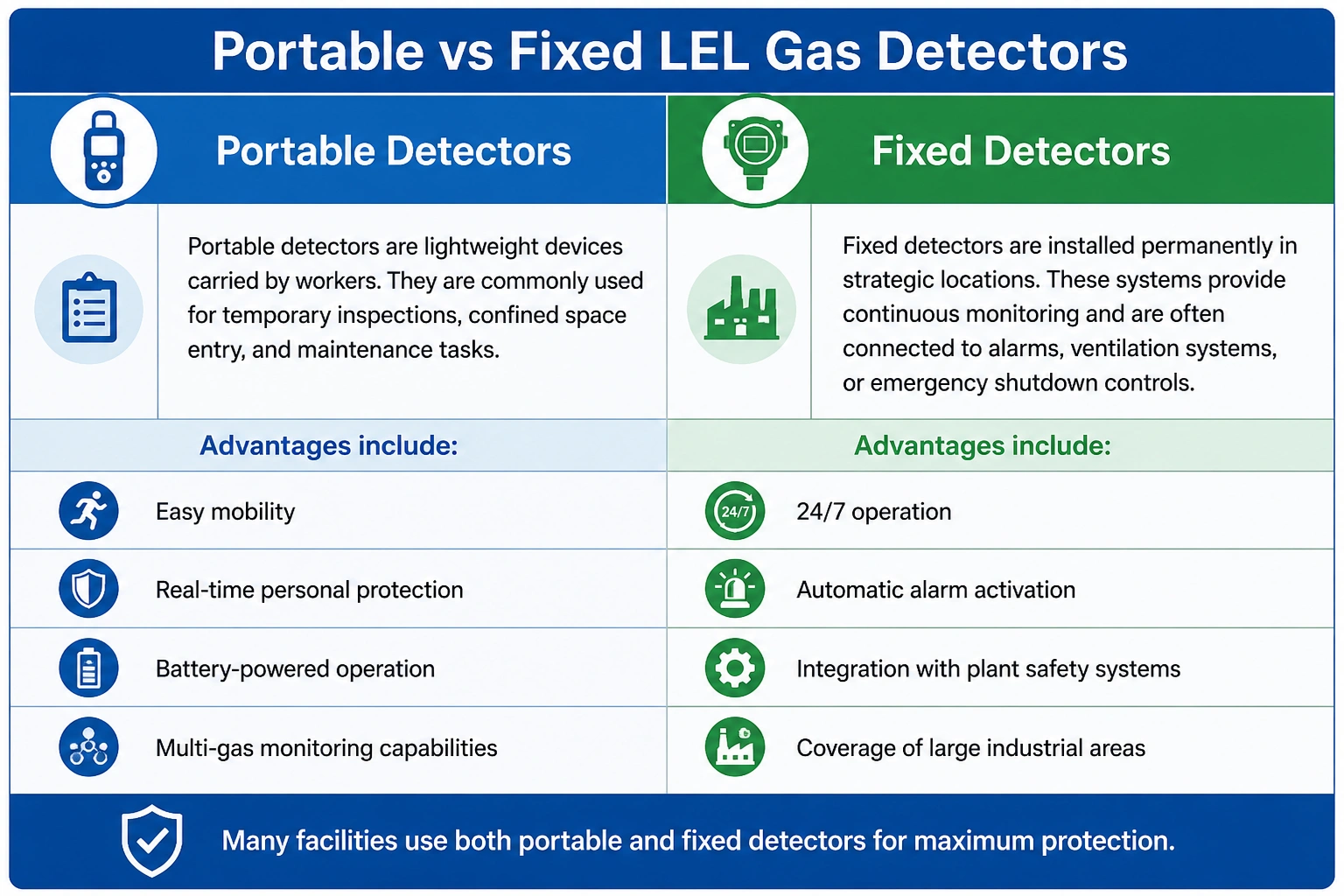
Comparison: Portable vs Fixed LEL Gas Detectors
Portable Detectors
Portable detectors are lightweight devices carried by workers. They carry portable detectors because these lightweight devices support temporary inspections, confined space entry, and maintenance tasks.
Advantages include:
- Easy mobility
- Real-time personal protection
- Battery-powered operation
- Multi-gas monitoring capabilities
Fixed Detectors
Companies install fixed detectors permanently in strategic locations to provide continuous monitoring. They often connect these systems to alarms, ventilation systems, or emergency shutdown controls.
Advantages include:
- 24/7 operation
- Automatic alarm activation
- Integration with plant safety systems
- Coverage of large industrial areas
Many facilities use both portable and fixed detectors for maximum protection.
Calibration and Maintenance LEL in Gas Detector
Like any safety equipment, LEL gas detectors require routine maintenance to ensure accurate performance.
Regular calibration is essential because sensor sensitivity can drift over time. Most manufacturers recommend bump testing and calibration at scheduled intervals.
Maintenance typically includes:
- Sensor inspection
- Battery checks
- Alarm verification
- Cleaning and calibration
- Firmware updates
Conclusion
LEL gas detectors are essential tools for preventing fires and explosions in hazardous environments. By continuously monitoring combustible gas concentrations, these devices provide early warnings that help protect workers, facilities, and operations.
Whether used in portable form for personal safety or as part of a fixed industrial monitoring system, LEL detectors contribute significantly to safer workplaces and more efficient emergency response.
Frequently Asked Questions
What is the difference between sensitivity and cross sensitivity?
Sensitivity refers to how strongly a sensor responds to its target gas. Cross sensitivity refers to the sensor responding to other gases besides the target gas.
Can cross sensitivity be completely eliminated?
No sensor is perfectly selective under all conditions. However, proper technology selection, filtering, calibration, and software compensation can greatly reduce cross sensitivity effects.
Which gas sensor technology has the best selectivity?
NDIR sensors generally offer high selectivity for gases like CO₂, while electrochemical sensors provide strong selectivity for many toxic gases. The best technology depends on the application.
Why are electrochemical sensors prone to cross sensitivity?
Electrochemical sensors rely on oxidation and reduction reactions at electrode surfaces. Different gases may undergo similar reactions and produce similar electrical signals.