
Toxic gases are among the most dangerous hazards found in industrial workplaces, mining operations, and confined spaces. Unlike visible dangers such as heavy machinery or falling objects, hazardous gases are often impossible to detect without specialized equipment. Many toxic gases are colorless and odorless, allowing exposure to happen without warning.
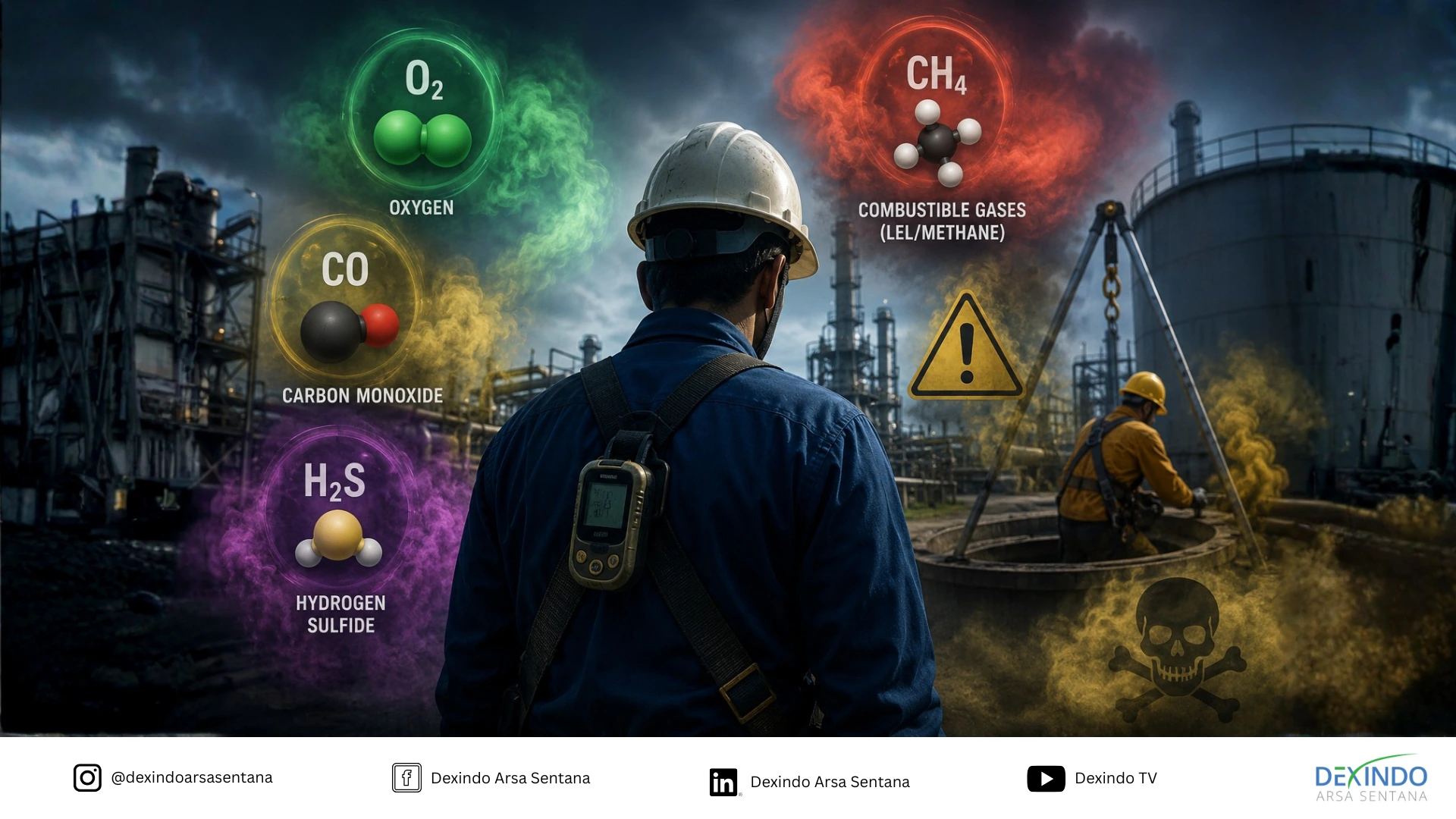
To reduce these risks, workers in high-risk industries commonly carry portable gas monitors that continuously detect common gases or atmospheric hazards, including: Oxygen (O₂), Carbon monoxide (CO), Hydrogen sulfide (H₂S), and Combustible gases (LEL/methane)
These devices help workers recognize unsafe conditions before exposure leads to poisoning, suffocation, fires, or explosions.
What Are Toxic Gases?
Toxic gases are airborne substances that can cause harm when inhaled at dangerous concentrations. Some gases directly affect the lungs and respiratory system, while others interfere with the body’s ability to transport oxygen. Certain gases are also capable of displacing oxygen from the air, creating life-threatening conditions even when the environment appears normal.
Hazardous gases can originate from natural underground formations, industrial equipment, chemical reactions, fuel combustion, or decomposition processes. In areas with limited ventilation, these gases may accumulate quickly and become extremely dangerous.
The severity of exposure depends on several factors, including gas concentration, duration of exposure, and the type of gas involved. In some situations, a worker may experience symptoms within seconds.
Why Are Toxic Gases Dangerous?
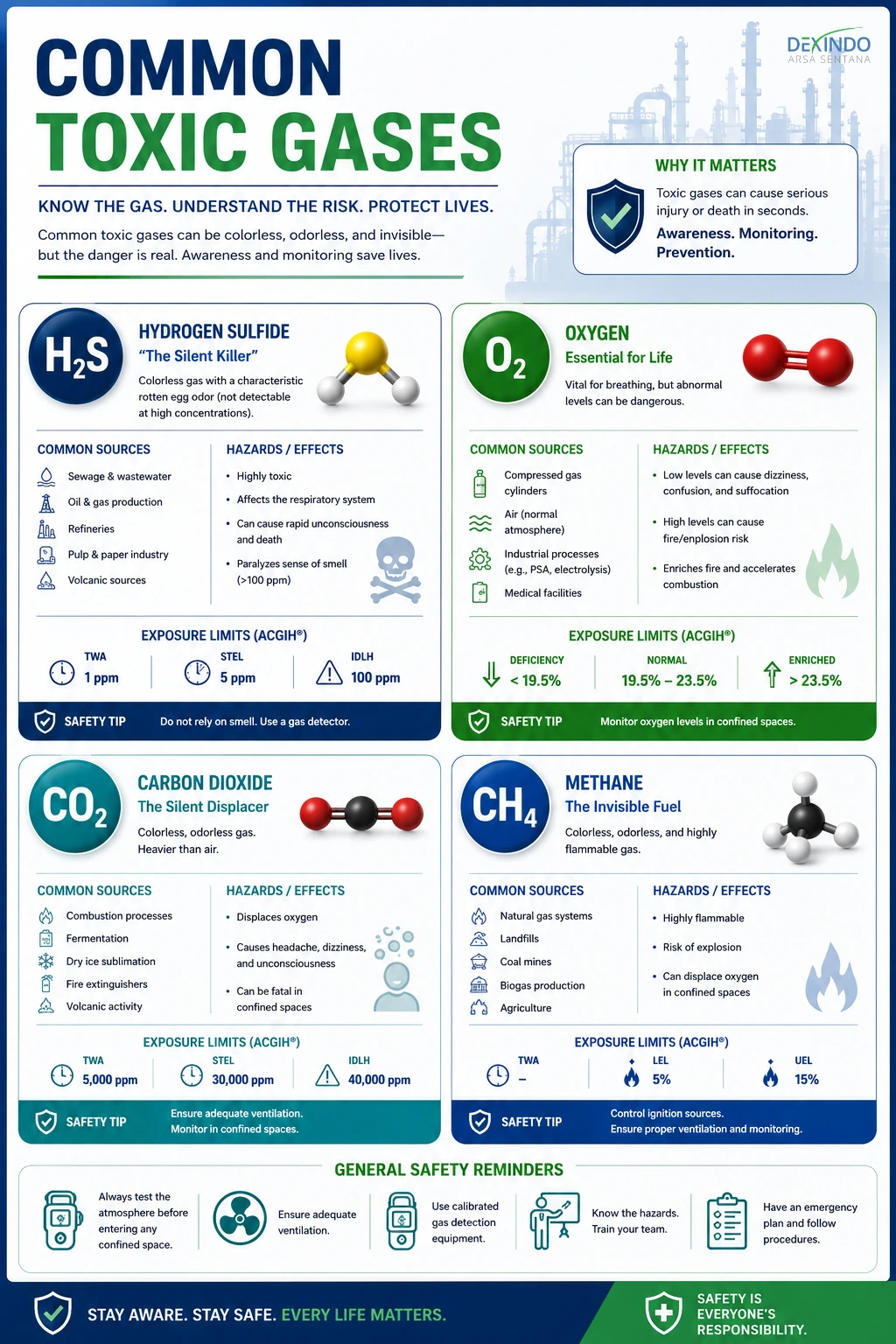
As the word “toxic” suggests, these gases can seriously harm human health, especially because workers often cannot detect them naturally. Carbon monoxide, for example, has no smell or color, while hydrogen sulfide may disable a person’s sense of smell at high concentrations.
Industries involving underground operations, confined spaces, chemical handling, and fuel-powered equipment face especially high risks because gas levels can change rapidly during normal activities.
Read: Why Do Gas Detectors Trigger False Alarms? Causes and Solutions
Dangerous Gases in Mining
Mining operations are particularly vulnerable to atmospheric hazards because gases can become trapped underground where ventilation is limited. Some gases are naturally released from rock formations, while others are generated by mining equipment or blasting activities.
Methane (CH₄)
Methane is one of the most common and dangerous gases found in underground mines. Although methane is not highly toxic, it is extremely flammable. When methane accumulates in enclosed areas, a spark or heat source can trigger a catastrophic explosion.
This is why methane monitoring is essential in coal mining operations and underground tunnels.
Carbon Monoxide (CO)
Carbon monoxide is produced by incomplete combustion from diesel equipment, underground fires, blasting operations, and fuel-powered machinery. Since the gas is invisible and odorless, workers may not realize exposure is occurring.
Even low concentrations can affect the body’s ability to transport oxygen through the bloodstream. Common symptoms include headaches, fatigue, dizziness, nausea, and confusion. High exposure levels can quickly become fatal.
Hydrogen Sulfide (H₂S)
Hydrogen sulfide may occur naturally in underground formations or develop during industrial processes involving sulfur-containing materials. At low concentrations, the gas smells like rotten eggs. However, high concentrations rapidly weaken the sense of smell, making it extremely dangerous.
Exposure may cause eye irritation, coughing, breathing difficulty, dizziness, and respiratory failure. In severe cases, hydrogen sulfide can cause collapse and death within minutes.
Oxygen Deficiency (O₂)
Oxygen-deficient atmospheres are another major concern in mining operations. Atmospheres containing less than 19.5% oxygen are considered hazardous. Gases such as methane and carbon dioxide can displace oxygen in underground spaces, reducing breathable air.
Low oxygen levels may lead to confusion, rapid breathing, poor judgment, unconsciousness, and suffocation. Because the human body cannot naturally detect oxygen deficiency, miners rely heavily on portable gas detectors.
Common Gases Found in Confined Spaces
Confined spaces are enclosed or partially enclosed areas that are not designed for continuous occupancy, such as storage tanks, pipelines, utility vaults, silos, and sewer systems. These environments often have limited airflow, allowing hazardous gases to accumulate quickly and create dangerous atmospheric conditions.
Several gases are commonly found in confined spaces, each with different risks and health effects.
| Gas | Main Hazard | Common Risk |
|---|---|---|
Oxygen (O₂) | Oxygen depletion or enrichment | Oxygen levels below 19.5% are considered oxygen-deficient, while levels above 23.5% increase fire risks |
Methane (CH₄) | Flammable gas and asphyxiant | Can displace oxygen and create explosion hazards in enclosed areas |
Hydrogen Sulfide (H₂S) | Highly toxic and flammable | Heavier than air, tends to collect in low areas and may cause respiratory failure |
Carbon Monoxide (CO) | Toxic asphyxiant | Prevents the blood from carrying oxygen effectively |
Nitrogen (N₂) | Oxygen displacement | Often used as an inert gas and may replace breathable oxygen |
Ammonia (NH₃) | Respiratory irritant | Can damage the eyes, skin, and respiratory system |
Acetylene (C₂H₂) | Highly flammable gas | Commonly used in welding and may ignite easily |
Carbon Dioxide (CO₂) | Asphyxiant | Can accumulate in poorly ventilated spaces and reduce oxygen levels |
Chlorine (Cl₂) | Toxic respiratory gas | Irritates the lungs and respiratory system even at low concentrations |
Why Workers Should Carry Multi-Gas Monitors?
Portable gas monitors are considered essential safety equipment in hazardous industries because several gas hazards can exist at the same time. Most workers in mining, manufacturing, and confined space operations carry four-gas detectors capable of monitoring oxygen, carbon monoxide, hydrogen sulfide, and combustible gases simultaneously.
When dangerous gas levels are detected, the monitor activates alarms using sound, vibration, and flashing lights. These alerts allow workers to evacuate the area, improve ventilation, or use respiratory protection before conditions become life-threatening.
Without gas detection equipment, workers may unknowingly enter hazardous atmospheres where exposure can become fatal within minutes.
Read: Comparison Unit: Honeywell MicroClip XL vs Max XT II
How Gas Detection Improves Workplace Safety
Gas detection systems play a critical role in preventing workplace accidents and fatalities. Portable gas monitors provide real-time atmospheric monitoring and early warnings before conditions become immediately dangerous to life and health.
These devices help workers:
- Detect toxic exposure early
- Prevent oxygen deficiency incidents
- Reduce explosion risks
- Improve confined space safety
- Respond faster during emergencies
Read: How Gas Detector Sensors Work and Why Detection Can Fail
Many industries also combine portable detectors with fixed gas monitoring systems and ventilation controls to improve overall workplace safety.
Conclusion
Toxic gases continue to pose serious risks across mining operations, industrial facilities, and confined spaces. Carbon monoxide, hydrogen sulfide, methane, oxygen-deficient atmospheres, and carbon dioxide can all threaten worker health and safety when not properly monitored.
Because many hazardous gases are invisible and difficult to detect naturally, portable multi-gas monitors have become essential safety tools in hazardous work environments. Understanding where toxic gases are commonly found, how they affect the body, and why gas detection matters is critical for reducing accidents and protecting workers from potentially fatal exposure.
Reference:
- https://sensidyne.com/application/understanding-toxic-gas-hazards/
- https://www.chartindustries.com/Articles/The-Most-Dangerous-Gases-In-Mining
- https://newcastlesafetyservicing.com/gases-in-mines/
- https://www.hetek.com/types-of-toxic-gases-and-their-health-effects/