
Portable multi-gas detectors play an important role in industrial safety programs, particularly in sectors such as oil & gas, marine, petrochemical, utilities, manufacturing, and facility maintenance.
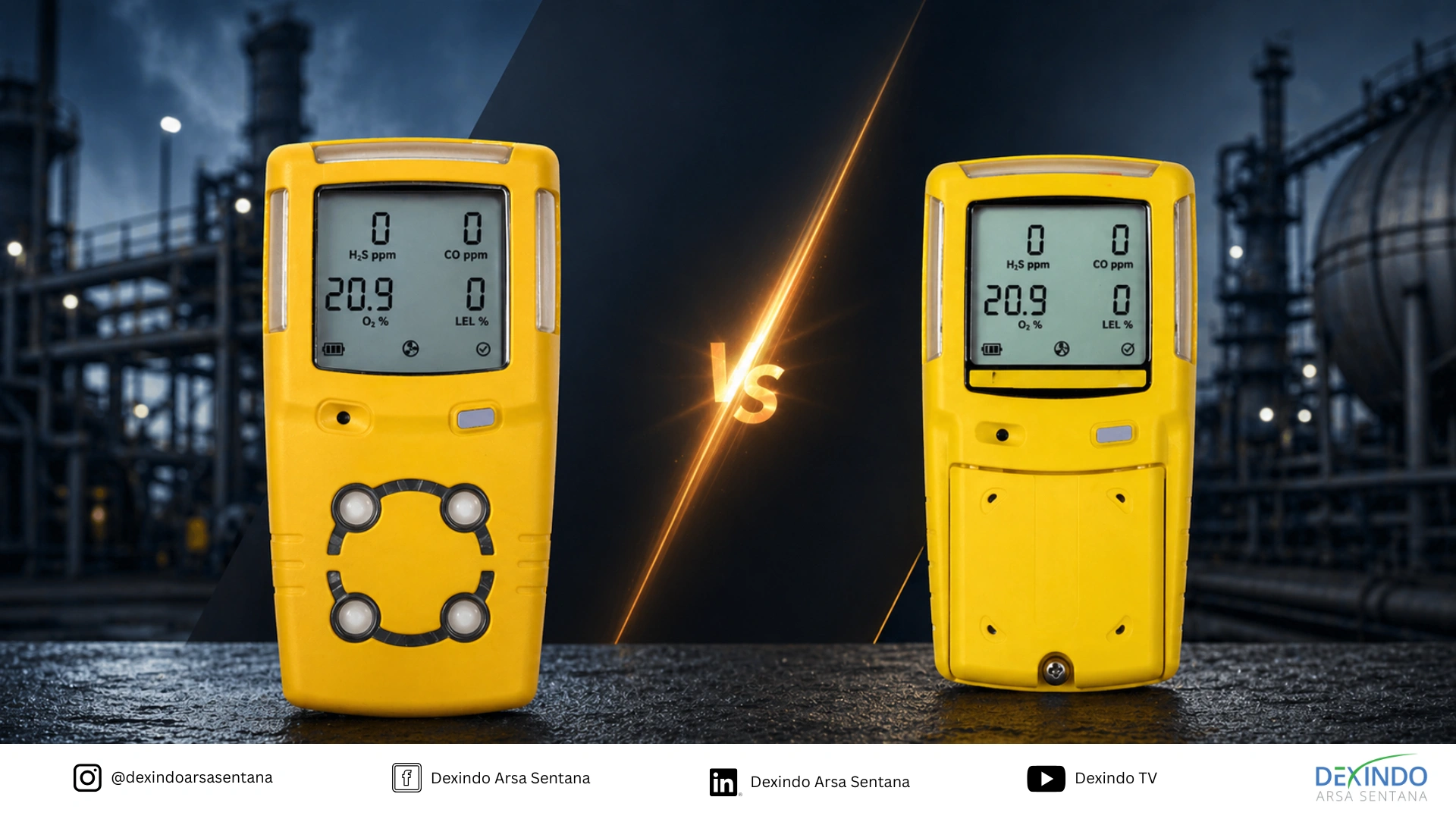
Among the commonly deployed 4-gas detectors in Singapore and Malaysia are the Honeywell BW MicroClip XL and the BW Max XT II. Both devices are designed to monitor four standard atmospheric hazards: Oxygen (O₂), Carbon Monoxide (CO), Hydrogen Sulfide (H₂S), and combustible gases (LEL).
Although they share similar detection capabilities, the two models are built for different operational environments and work practices.
This article compares their key differences, including portability, pump capability, battery performance, durability, and suitability for various industrial applications.
Read: Know the Different: Single vs Multi Sensor Gas Detectors
Overview of The Honeywell MicroClip XL vs Max XT II
At first glance, the Honeywell BW MicroClip XL and BW Max XT II appear similar because both are portable 4-gas detectors from Honeywell’s BW series. However, their intended use in the field is quite different.
The MicroClip XL is primarily designed for personal diffusion monitoring, focusing on lightweight portability and extended daily use.
The Max XT II, on the other hand, includes an integrated sampling pump for remote atmospheric testing, making it more suitable for confined space applications and pre-entry gas checks.
Honeywell BW MicroClip XL
The Honeywell BW MicroClip XL is widely used for routine industrial gas monitoring where mobility and simplicity are important.
Its compact form factor and lighter weight make it comfortable for long work shifts, particularly for technicians, contractors, operators, and maintenance personnel working across large facilities.
The detector operates using diffusion monitoring, meaning gases enter the sensors naturally through ambient air exposure.
The MicroClip XL is generally more suitable for:
- Everyday personnel monitoring
- Large workforce deployment
- Long-duration wearable use
- General industrial environments
Because of its portability, the MicroClip XL is commonly deployed in:
- Manufacturing facilities
- Utility plants
- General plant maintenance
- Construction environments
- Offshore routine inspections
- Warehouse and logistics operations
For organizations managing larger workforces, diffusion-based detectors such as the MicroClip XL are often preferred for standard personnel monitoring programs.
Honeywell BW Max XT II
The Honeywell BW Max XT II is designed for applications where remote atmospheric sampling is required before personnel enter potentially hazardous areas.
Unlike diffusion-based detectors, the Max XT II uses an internal motorized pump to draw air samples through tubing. This allows gas testing to be conducted from a safe distance before entry into confined or enclosed spaces.
The detector supports remote sampling distances of up to approximately 23 meters, depending on tubing configuration and environmental conditions.
The Max XT II is better suited for:
- Confined space entry
- Remote atmospheric sampling
- Enclosed area inspections
- Higher-risk maintenance activities
Typical applications include:
- Tank inspections
- Vessel entry
- Underground utility works
- Wastewater facilities
- Petrochemical shutdown maintenance
- Marine and shipyard operations
In many industrial sites, pumped gas detectors are incorporated into confined space entry procedures as part of permit-to-work and atmospheric testing requirements.
| Feature | Honeywell BW MicroClip XL | Honeywell BW Max XT II |
|---|---|---|
| Gas Detection | O₂, CO, H₂S, LEL | O₂, CO, H₂S, LEL |
| Monitoring Method | Diffusion | Pumped Sampling |
| Built-in Pump | No | Yes |
| Weight | Approx. 190 g | Approx. 328 g |
| Battery Runtime | Up to 18 hours | Around 13 hours |
| Protection Rating | IP68 | IP66/67 |
| Primary Application | Personal Monitoring | Confined Space Entry |
| Sampling Distance | Direct Exposure Only | Up to 23 m Remote Sampling |
Portability and User Comfort
One of the biggest operational differences between the two devices is portability.
The MicroClip XL is noticeably smaller and lighter, making it more comfortable for continuous use throughout an entire shift. Workers who frequently move between work areas generally benefit from the reduced weight and simplified operation.
The Max XT II is heavier because of the integrated pump system and reinforced housing components. While this increases device capability, it also adds additional weight during extended wear.
In practice, portability requirements often depend on whether the detector is intended for continuous personal monitoring, or task-based atmospheric testing.
Battery Performance
Battery runtime can influence operational efficiency, especially during extended shifts or offshore activities.
The MicroClip XL offers longer operating time under standard conditions, typically up to 18 hours.
The Max XT II generally provides around 13 hours of runtime, partly due to the additional power consumption from the internal pump mechanism.
For operations involving multiple shifts or long-duration field activities, charging schedules and spare device availability may need to be considered.
Durability and Maintenance
Both detectors are built for industrial environments, though their construction priorities differ slightly.
The MicroClip XL focuses on lightweight durability and simplified operation, while the Max XT II incorporates additional structural reinforcement to support pumped sampling activities.
Maintenance considerations may include:
- Sensor replacement intervals
- Calibration schedules
- Pump maintenance requirements
- Docking station compatibility
- Fleet management integration
Since pumped detectors contain additional moving components, maintenance planning for the Max XT II may be slightly more involved compared to diffusion-only models.
Read: How Gas Detector Sensors Work and Why Detection Can Fail
Conclusion
Both the Honeywell BW MicroClip XL and BW Max XT II continue to be widely deployed across industrial operations in Singapore, Malaysia, and other parts of Southeast Asia, particularly in sectors where portable gas detection is essential for daily safety monitoring and confined space work.
The MicroClip XL emphasizes lightweight portability and operational simplicity, making it practical for day-to-day personal gas monitoring.
The Max XT II provides additional functionality through its integrated sampling pump, particularly for confined space and remote testing applications.
Understanding how each detector is designed to operate can help ensure that gas detection equipment aligns more effectively with site conditions, operational workflows, and safety procedures.
Referensi:
- https://automation.honeywell.com/us/en/products/sensing-solutions/gas-and-flame-detection/portables/multi-gas/honeywell-bw-microclip-series-multi-gas-detector
- https://automation.honeywell.com/us/en/products/sensing-solutions/gas-and-flame-detection/portables/multi-gas/honeywell-bw-max-xt-ii-multi-gas-detector